
 Keeping your teeth clean is more important than ever when you have braces! Food bits have more spots than usual to hide in your mouth, so you must be diligent in order to avoid bad breath, swollen gums, discolored teeth and cavities. If you remove plaque regularly during treatment, you'll experience better results and shorter treatment time. Keep plaque at bay with these top ten tips:
1. One tooth at a time. When you brush, take time with each individual tooth – at least 10 seconds each – and pay careful attention to the spots where your teeth touch your braces.
2. It’s all about the angles. Brush the tops of your teeth and braces with your brush angled down toward where they meet. Brush the bottoms of your teeth and braces with your brush angled up.
3. The tooth, the whole tooth, nothing but the tooth. While the front surface of your teeth may seem like the most logical to clean, it’s equally important to clean the inner surface of your teeth (tongue side) as well as the chewing surface. And be sure to clean along your gum line – a key spot for plaque buildup.
4. Step 1: eat, step 2: clean. While you’re in treatment, it’s important to brush after every meal. Bits of food can easily get caught between braces and teeth, and these food bits interact with bacteria in your mouth to cause decay. The longer food is in contact with your teeth, the greater opportunity for plaque to form. If you are eating somewhere that you can’t brush, thoroughly rinse your mouth with water.
5. Like a Boy Scout, always be prepared. The easiest way to be sure you can brush after every meal is to get in the habit of taking a toothbrush, toothpaste and floss with you wherever you go. Designate a special container just for your teeth-cleaning tools and keep it in your purse, backpack, or laptop case.
6. Remove the moving parts. If you have elastic bands or headgear, remove these parts before you brush or floss.
7. Fluoride is your friend. Fluoride helps prevent cavities. Be sure to brush with fluoride toothpaste, and rinse with fluoride mouthwash.
8. Pointy brushes reach tiny places. Interproximal brushes (sometimes called proxa brushes or interdental brushes) are cone-shaped and come in very handy for reaching spots around your braces that standard brushes can’t.
9. Find the floss for you. Regular floss works for some patients, but others find it easier to work with a floss threader, which helps you get the floss into tight places. Other patients like an all-in-one product called Superfloss, which comes with a stiff end for easy threading, a spongy section for cleaning wide spaces, and regular floss for narrow spaces.
10. Make time for the pros. It’s your job to take care of the everyday cleaning. But make sure to visit your dentist regularly while in treatment, to get the deep, thorough cleaning that only a professional can provide. If you need help finding the right Dentist for you, feel free to contact our office - we’d love to help!
We hope this helps, and remember to give our team a call if you ever have any questions!
Keeping your teeth clean is more important than ever when you have braces! Food bits have more spots than usual to hide in your mouth, so you must be diligent in order to avoid bad breath, swollen gums, discolored teeth and cavities. If you remove plaque regularly during treatment, you'll experience better results and shorter treatment time. Keep plaque at bay with these top ten tips:
1. One tooth at a time. When you brush, take time with each individual tooth – at least 10 seconds each – and pay careful attention to the spots where your teeth touch your braces.
2. It’s all about the angles. Brush the tops of your teeth and braces with your brush angled down toward where they meet. Brush the bottoms of your teeth and braces with your brush angled up.
3. The tooth, the whole tooth, nothing but the tooth. While the front surface of your teeth may seem like the most logical to clean, it’s equally important to clean the inner surface of your teeth (tongue side) as well as the chewing surface. And be sure to clean along your gum line – a key spot for plaque buildup.
4. Step 1: eat, step 2: clean. While you’re in treatment, it’s important to brush after every meal. Bits of food can easily get caught between braces and teeth, and these food bits interact with bacteria in your mouth to cause decay. The longer food is in contact with your teeth, the greater opportunity for plaque to form. If you are eating somewhere that you can’t brush, thoroughly rinse your mouth with water.
5. Like a Boy Scout, always be prepared. The easiest way to be sure you can brush after every meal is to get in the habit of taking a toothbrush, toothpaste and floss with you wherever you go. Designate a special container just for your teeth-cleaning tools and keep it in your purse, backpack, or laptop case.
6. Remove the moving parts. If you have elastic bands or headgear, remove these parts before you brush or floss.
7. Fluoride is your friend. Fluoride helps prevent cavities. Be sure to brush with fluoride toothpaste, and rinse with fluoride mouthwash.
8. Pointy brushes reach tiny places. Interproximal brushes (sometimes called proxa brushes or interdental brushes) are cone-shaped and come in very handy for reaching spots around your braces that standard brushes can’t.
9. Find the floss for you. Regular floss works for some patients, but others find it easier to work with a floss threader, which helps you get the floss into tight places. Other patients like an all-in-one product called Superfloss, which comes with a stiff end for easy threading, a spongy section for cleaning wide spaces, and regular floss for narrow spaces.
10. Make time for the pros. It’s your job to take care of the everyday cleaning. But make sure to visit your dentist regularly while in treatment, to get the deep, thorough cleaning that only a professional can provide. If you need help finding the right Dentist for you, feel free to contact our office - we’d love to help!
We hope this helps, and remember to give our team a call if you ever have any questions!
Showing posts with label Dr. Dougherty's office. Show all posts
Showing posts with label Dr. Dougherty's office. Show all posts
Tuesday, July 17, 2012
Top ten tips for keeping your BRACES sparklin’ clean!
Keeping your teeth clean is more important than ever when you have braces! Food bits have more spots than usual to hide in your mouth, so you must be diligent in order to avoid bad breath, swollen gums, discolored teeth and cavities. If you remove plaque regularly during treatment, you'll experience better results and shorter treatment time. Keep plaque at bay with these top ten tips:
1. One tooth at a time. When you brush, take time with each individual tooth – at least 10 seconds each – and pay careful attention to the spots where your teeth touch your braces.
2. It’s all about the angles. Brush the tops of your teeth and braces with your brush angled down toward where they meet. Brush the bottoms of your teeth and braces with your brush angled up.
3. The tooth, the whole tooth, nothing but the tooth. While the front surface of your teeth may seem like the most logical to clean, it’s equally important to clean the inner surface of your teeth (tongue side) as well as the chewing surface. And be sure to clean along your gum line – a key spot for plaque buildup.
4. Step 1: eat, step 2: clean. While you’re in treatment, it’s important to brush after every meal. Bits of food can easily get caught between braces and teeth, and these food bits interact with bacteria in your mouth to cause decay. The longer food is in contact with your teeth, the greater opportunity for plaque to form. If you are eating somewhere that you can’t brush, thoroughly rinse your mouth with water.
5. Like a Boy Scout, always be prepared. The easiest way to be sure you can brush after every meal is to get in the habit of taking a toothbrush, toothpaste and floss with you wherever you go. Designate a special container just for your teeth-cleaning tools and keep it in your purse, backpack, or laptop case.
6. Remove the moving parts. If you have elastic bands or headgear, remove these parts before you brush or floss.
7. Fluoride is your friend. Fluoride helps prevent cavities. Be sure to brush with fluoride toothpaste, and rinse with fluoride mouthwash.
8. Pointy brushes reach tiny places. Interproximal brushes (sometimes called proxa brushes or interdental brushes) are cone-shaped and come in very handy for reaching spots around your braces that standard brushes can’t.
9. Find the floss for you. Regular floss works for some patients, but others find it easier to work with a floss threader, which helps you get the floss into tight places. Other patients like an all-in-one product called Superfloss, which comes with a stiff end for easy threading, a spongy section for cleaning wide spaces, and regular floss for narrow spaces.
10. Make time for the pros. It’s your job to take care of the everyday cleaning. But make sure to visit your dentist regularly while in treatment, to get the deep, thorough cleaning that only a professional can provide. If you need help finding the right Dentist for you, feel free to contact our office - we’d love to help!
We hope this helps, and remember to give our team a call if you ever have any questions!

Wednesday, May 9, 2012
"What Should I Expect During My Initial Consultation?"

Great question! When you first come in for your initial
consultation we will conduct a comprehensive examination to assess your oral
health. This will better enable us to determine the best treatment method for
you.
Your orthodontic evaluation will consist of an oral and
facial examination to assess your oral health. We will have you take intraoral
and facial photographs as well as panoramic and cephalometric X-rays to help
determine the proper orthodontic treatment method. Then, an impression of your
teeth and bite will be taken to construct a model of your mouth. (This will
help us when examining your diagnostic records).
At your second appointment, we will discuss your options
with you. Our team feels it’s important to take the time to carefully examine
your diagnostic records after your consultation so that we can more thoroughly
prepare for your treatment. This additional preparation will ensure that you
receive the best orthodontic care possible. At this time, we encourage you to
ask us any questions you may have about your treatment.
If you are seeking orthodontic treatment for your child, our
staff asks that both you and your child attend the initial consultation. We
feel it is important that both you and your child completely understand the
doctor’s recommendations before we proceed with treatment.
Give us a call today and schedule a consultation! We look
forward to hearing from you!
Monday, April 16, 2012
“When should my child visit for an orthodontic consultation?”

Great question! Braces were originally considered to be best appropriate for teens. But these days, kids as old as seven are beginning their orthodontic treatment. Because preadolescent kids are typically not self-conscious, our friends at the American Association of Orthodontists suggest it could be a good idea to start early.
Experts, however, say it depends on the treatment required. Some children who get braces at an early age end up in a second phase of treatment, and end up having braces well into their teenage years despite starting young.
Most orthodontic treatment begins between ages nine and 14, and the folks at AAO estimate most orthodontic treatment lasts from one to three years, with two years being the average. It’s important, however, that children be screened no later than age seven for us to assess what the best age for treatment is.
We hope this helps! Please give us a call if you have any questions about your child’s treatment! See you soon!
Monday, April 9, 2012
Spring is here! Do we have your current contact info?

Spring is in the air! We also encourage you to call us and let us know if you have any new phone numbers or if your contact information has changed!
As you probably know, you can always connect with us on our Facebook page, but we invite you to please contact our office with any updates to phone numbers and addresses, so that we may be able to reach you.
Thank you! Have a great week!
Wednesday, March 14, 2012
St. Patrick’s Day Fun Facts!

Our team at office of Dr. Harry Dougherty wants to know: Will you be wearing your green this Saturday? Whether Irish or not, millions of people around the world celebrate St. Patrick’s Day with toasts, parades and “the wearing of the green.” Here are some fun facts about St. Patty’s Day we know you will enjoy:
• St. Patrick’s Day is observed on March 17th because that is the feast day of St. Patrick, the patron saint of Ireland. It is also a worldwide celebration of Irish culture and history.
• The name “lephrechaun” has several origins. It could be from the Irish Gaelic word “leipreachan,” which means “a kind of aqueous sprite.” Or, it could be from “leath bhrogan,” which simply means “shoemaker.”
• Some American towns have Irish names. They include: Shamrock Lakes, Indiana; Shamrock, Oklahoma; Shamrock, Texas; Dublin, California and Dublin, Ohio and Mount Gay-Shamrock, West Virginia
• Despite what you may have heard, St. Patrick never banished snakes from Ireland. In fact, no snakes exist or ever existed in Ireland. Ireland is surrounded by icy ocean waters, much too cold to allow snakes to migrate from Britain or anywhere else.
• St. Patrick’s Day was first celebrated in America in Boston, Massachusetts, in 1737. Approximately 34 million Americans claim Irish ancestry. That’s almost nine times the population of Ireland, which has 4.1 million people.
If you have something special planned for St. Patrick’s Day, let us know by posting a comment on our Facebook page.
Wednesday, February 15, 2012
Valentine’s Day and your teeth, from Dr. Dougherty's office

Valentine’s Day was yesterday, and there is a lot of candy making the rounds this week. It’s once again time to remind all our patients to be extra careful when choosing those candies and treats!
All those sweet, sour and sticky candies may taste great, but these treats are known to damage teeth, as well as braces if you’re wearing them! Did you know sour candies can be acidic to your teeth, and actually wear down the enamel that protects them? This can cause tooth decay and cavities! Sour and fruity candy, such as Starburst and Skittles, are the worst for your teeth since these candies have a low pH value, which is known to ruin enamel.
We recommend softer treats, such as soft chocolate or peanut butter cups, or melt-in-your-mouth foods. Those who indulge should make sure they brush and floss between teeth, as well as at the gum line.
All of us at Dr. Dougherty's office hope you had a great Valentine’s Day!
Thursday, February 9, 2012
February is American Heart Month

Did you know February is American Heart Month? It’s a great time to take notice of the health of your heart, says Dr. Dougherty. Cardiovascular disease remains American's number one killer, according to the American Heart Association. Studies have shown a correlation between gum disease and heart disease, underscoring the importance of good oral health care.
Visiting our office on a regular basis can help prevent gum disease or at least catch it in its early stages. And because people with dental insurance are more likely to visit their dentist when they should, a healthy mouth begins with a visit to Dr. Dougherty's office . In observance of Heart Month, Dr. Dougherty says it’s also important to know your numbers: blood pressure (less than 120/80), cholesterol (less than 200) and BMI (less than 25). If you have any questions about heart health, or about your treatment at Dr. Dougherty's office, please give us a call today.
Thursday, February 2, 2012
February is National Children’s Dental Health Month, from Dr. Dougherty's office
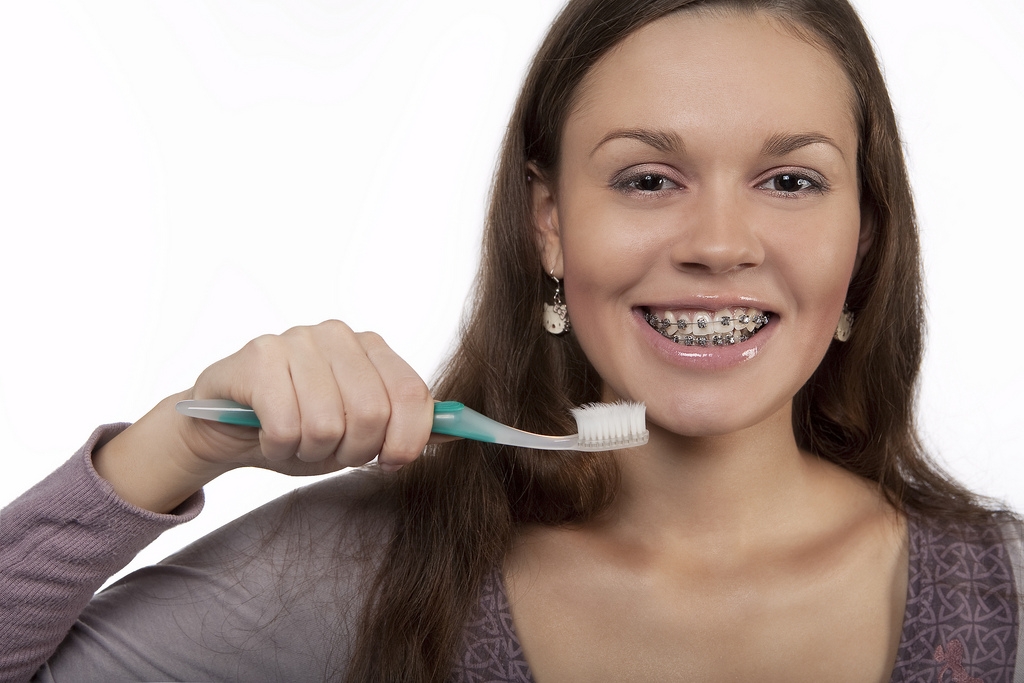
With February being National Children's Dental Health Month, our team at Dr. Dougherty's office thought we'd share a few good oral hygiene tips with our patients, courtesy of the American Dental Association, or ADA.
• Teeth brushing techniques: It takes only two minutes to properly brush, using short, gentle strokes and devoting extra attention to the gumline, areas around fillings and hard-to-reach areas such as the back teeth.
• Flossing: hold the floss snugly between thumbs and index finger and place between each of the teeth, making sure to go beneath the gumline and curving the floss around the base of each tooth.
• Snack wisely: choose healthy snacks such as vegetables, fruits and cheese and avoid sticky, chewy candies that can stick to the teeth. If you eat these snacks, make sure to brush after doing so.
• Carbonated or sugary drinks: these beverages create acids that can damage the teeth when mixed with saliva, so they should be avoided altogether. When drinking one of these beverages, avoid sipping on it throughout the day. Rather, have a drink and then brush your teeth.
• Regular dental visits: You should visit us regularly (approximately every six months).
National Children's Dental Health Month, now in its 62nd year, aims to increase awareness about the importance of kids' oral health. If you have any questions about keeping your mouth healthy, or about your treatment with Dr. Dougherty's office, please feel free to give us a call!
Subscribe to:
Posts (Atom)


 Posts
Posts


